The Blueprint Before The Blueprint
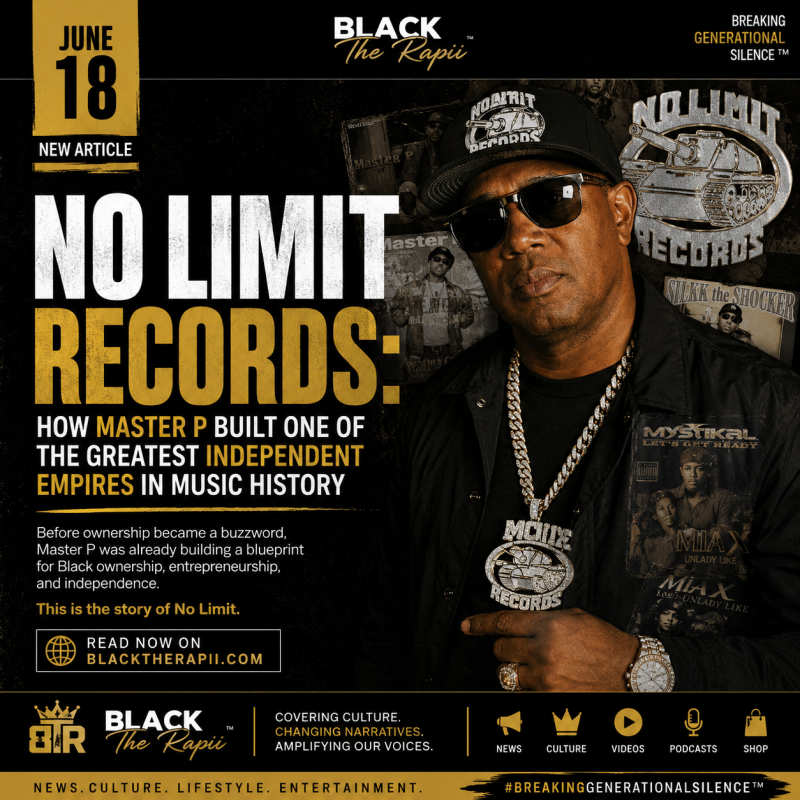
Long before ownership became a buzzword in hip-hop, Percy "Master P" Miller was already building one of the most successful independent music empires the culture had ever seen.
Today, artists talk openly about masters, equity, ownership, and controlling their own destiny. But decades before those conversations became mainstream, Master P was proving that Black entrepreneurs could build wealth, influence, and national brands without relying on traditional industry gatekeepers.
No Limit Records wasn't just a record label.
It was a movement.
And for an entire generation, it represented what was possible when vision, hustle, and business strategy came together.
From Record Store To Empire
The No Limit story began with a small record store in Richmond, California.
Master P used money from a family settlement to open No Limit Records and began selling music independently. What started as a local operation soon evolved into one of the most recognizable brands in hip-hop.
Unlike many artists of the era, Master P understood that music was only one piece of the equation.
He studied distribution.
He studied marketing.
He studied ownership.
Most importantly, he studied leverage.
That mindset would separate No Limit from nearly every other label operating at the time.
Building A Southern Powerhouse
During the late 1990s, No Limit became a dominant force in music.
The label introduced a roster of artists who helped shape an entire era of Southern hip-hop, including:
• Master P
• Silkk The Shocker
• Mystikal
• Mia X
• C-Murder
• Fiend
• Mac
• Mr. Serv-On
At a time when East Coast and West Coast artists dominated headlines, No Limit helped elevate Southern rap into a national force.
The label's signature album covers, aggressive release schedule, and unmistakable branding became cultural staples.
Fans knew exactly what a No Limit release looked like before hearing a single song.
That's branding.
The Business Model That Changed Everything
What made No Limit revolutionary wasn't just the music.
It was the business.
Master P negotiated one of the most influential distribution deals in hip-hop history, allowing No Limit to maintain significant ownership while using a major distribution network to scale nationally.
That arrangement gave No Limit something many artists still fight for today:
Control.
Creative control.
Financial control.
Brand control.
Instead of simply being signed to the system, Master P learned how to use the system while protecting ownership.
The result was an empire that generated massive revenue while keeping power closer to the creators.
More Than Music
No Limit quickly expanded beyond records.
The brand moved into:
• Movies
• Clothing
• Merchandise
• Sports management
• Publishing
• Television opportunities
Master P understood a lesson many entrepreneurs still study today:
One audience can support multiple businesses.
The music created attention.
The business ecosystem created wealth.
Why No Limit Still Matters Today
The impact of No Limit can still be seen throughout modern entertainment.
Many of today's independent artists are following principles Master P implemented decades ago:
• Ownership
• Direct-to-consumer marketing
• Personal branding
• Multiple income streams
• Independent distribution
Artists often receive credit for introducing ideas that Master P was already practicing in the 1990s.
His influence reaches far beyond music.
It reaches into entrepreneurship itself.
The Black TheRapii Perspective
No Limit Records wasn't simply a successful label.
It was proof.
Proof that Black ownership could scale.
Proof that independent vision could compete nationally.
Proof that cultural influence and business excellence could exist under the same roof.
Before social media.
Before streaming.
Before the creator economy.
Master P was building a blueprint that many are still studying today.
And as the Cash Money and No Limit Tour prepares to celebrate an unforgettable era of hip-hop history, one thing remains clear:
The No Limit legacy was never just about selling records.
It was about showing the culture what ownership looks like.
Because before there were influencers, creators, and personal brands, there was Master P building an empire with no limits.